
If someone sends you “WLC” in a text, comment, or direct message, its meaning may not be immediately obvious.
Internet abbreviations often depend on the conversation, the platform, and the relationship between the people communicating.
In casual texting, WLC commonly means “Welcome.” It is a shortened form used to make messages quicker and more informal.
You may encounter WLC after saying “thanks,” joining a group, introducing yourself, or receiving an invitation. For example, someone might reply “WLC!” after you thank them for helping you.
However, abbreviations can have different meanings in specialized fields, so context matters.
People search for WLC meaning in text because short forms can be confusing, especially when they appear without additional explanation.
Understanding the surrounding conversation is usually the easiest way to determine what the sender intended.
Meaning & Definition
In everyday texting, WLC usually stands for “Welcome.” It is an informal abbreviation created by removing most of the vowels from the word while keeping enough letters for the intended meaning to remain recognizable.
For example:
Person A: “Thanks for adding me to the group!”
Person B: “WLC!”
Here, WLC means “Welcome.” The sender is essentially saying that the other person is welcome to the group.
Another common situation is a response to gratitude:
“Thanks for explaining that.”
“WLC!”
In this context, WLC functions similarly to “you’re welcome.”
The abbreviation is particularly suited to casual digital communication because texting culture frequently favors short, fast expressions.
People may use abbreviations when chatting with friends, commenting on social platforms, or communicating in informal online communities.
However, WLC should not automatically be interpreted as “welcome” in every possible situation. Abbreviations can represent different phrases in technical, professional, organizational, or specialized environments.
If the surrounding message does not involve greeting, appreciation, acceptance, or hospitality, another interpretation may be more appropriate.
The capitalization also does not necessarily change the meaning. You might see WLC, wlc, or occasionally Wlc. In casual messaging, these forms can communicate the same idea.
So, when someone uses WLC in an ordinary conversation, the simplest interpretation is generally “welcome” or “you’re welcome.” The exact sense depends on what was said immediately before it.
Usage in Different Contexts: Chat, Social Media, and Professional Fields
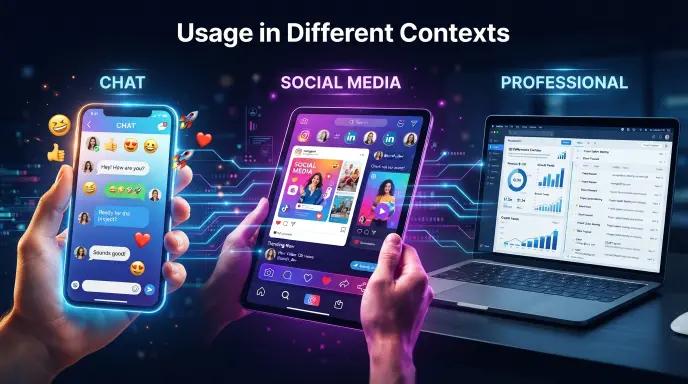
The meaning and usefulness of WLC can change according to the environment in which it appears.
In casual chat
Friends may use WLC as a quick response to “thanks” or as a welcoming expression.
Example:
“Thanks for inviting me!”
“WLC!”
It can sound relaxed and friendly rather than formal.
In group chats
WLC may appear when someone new joins a group.
“Everyone, meet Alex. He just joined us.”
“WLC, Alex!”
Here, the abbreviation communicates a simple greeting.
On social media
You might encounter WLC in comments, replies, or direct messages. Someone could use it when responding to a follower or acknowledging someone’s participation.
For example:
“Thanks for following!”
“WLC!”
The tone is generally casual and conversational.
In online communities
Gaming groups, forums, Discord communities, and other digital spaces often use abbreviations because members communicate rapidly.
WLC may be used when welcoming someone to a server, team, community, or discussion.
In professional communication
The situation is different in professional settings. Although colleagues may understand WLC, it is usually clearer to write “Welcome” or “You’re welcome” in formal emails, reports, business correspondence, or customer communication.
For instance, instead of writing:
“WLC to our organization.”
a professional message would normally say:
“Welcome to our organization.”
The abbreviation is therefore primarily associated with informal digital communication.
Its appropriateness depends less on the word itself and more on the relationship between the participants and the communication channel.
WLC Meaning in Chat, WhatsApp, Instagram, and TikTok
On messaging and social platforms, WLC generally carries the same basic meaning: “Welcome.” However, its practical use can vary slightly from platform to platform.
WLC in chat
In ordinary text conversations, WLC is often a short response to appreciation.
“Thanks for helping me!”
“WLC.”
Depending on the tone, it can mean “you’re welcome” rather than simply “welcome.”
WLC on WhatsApp
WhatsApp conversations are usually informal, so abbreviations are common. A person might write WLC after welcoming someone to a group or responding to thanks.
“Thanks for adding me here.”
“WLC 😊”
The surrounding message provides the strongest clue.
WLC on Instagram
On Instagram, WLC can appear in comments or DMs. Someone may use it while welcoming a new follower, responding to a thank-you message, or acknowledging someone’s participation.
WLC on TikTok
TikTok conversations are similarly informal. If someone comments “Thanks for the follow!” and receives “WLC,” the abbreviation is likely being used as a shortened version of “welcome.”
It is worth remembering that social media slang changes quickly. Some abbreviations become popular within specific communities and may have meanings that differ from their conventional interpretations.
Therefore, if WLC appears in an unusual sentence, don’t rely solely on the abbreviation. Look at the entire conversation. The message before and after it can reveal whether the sender means “welcome” or something else.
WLC Meaning in Chat, WhatsApp, Instagram, and TikTok
Not every occurrence of WLC is internet slang. In technical and professional environments, the same three letters can represent completely different terms.
Physics
WLC is not a universally fixed abbreviation with one standard meaning across all areas of physics. Researchers and technical documents may use abbreviations according to a particular experiment, institution, publication, or specialized field.
Therefore, interpreting WLC in a physics context requires examining the terminology surrounding it.
Medical terminology
Medical abbreviations are particularly context-dependent. WLC can potentially occur as an abbreviation within a specific healthcare organization, clinical document, study, or specialized terminology.
Because medical abbreviations can vary between institutions, it would be unsafe to assume that WLC always means “welcome” when it appears in medical material.
A medical abbreviation should be interpreted using the document’s terminology, specialty, and surrounding information.
Aircraft and aviation
Aviation also uses many standardized abbreviations and codes. WLC may appear in aviation-related material as a technical or organizational abbreviation rather than a texting expression.
Its exact interpretation depends on the aviation document, system, or terminology involved.
This distinction is important: WLC in a WhatsApp conversation and WLC in a technical document should not automatically be interpreted the same way.
When you encounter the term outside casual conversation, consider the source first. A message from a friend is likely to use internet slang, while a scientific paper, medical record, or aviation document may use WLC as a specialized abbreviation.
Common Misconceptions About WLC
One common misconception is that WLC has only one meaning everywhere. In reality, abbreviations are highly dependent on context.
Another misunderstanding is that WLC always means exactly “welcome.” In a conversation following a thank-you message, it may function more naturally as “you’re welcome.” For example:
“Thanks for your help.”
“WLC!”
The intended message is clearly a response to gratitude.
People also sometimes assume that capitalization creates a different meaning. In casual texting, wlc, WLC, and Wlc can all represent the same abbreviation.
Another misconception is that using WLC is appropriate in every situation. While it may work perfectly well between friends, using unexplained abbreviations in formal business communication can make a message less clear.
Tone is another important consideration. A short “WLC” may sound friendly in one conversation but overly brief in another.
Digital communication lacks many of the vocal cues found in face-to-face conversation, so surrounding words can influence how the abbreviation feels.
Finally, not every three-letter sequence should be interpreted as texting slang. If you encounter WLC in a scientific, medical, aviation, academic, or business document, check the specialized context before assuming it means “welcome.”
Similar Terms and Alternatives
Several expressions can communicate an idea similar to WLC, although they are not always interchangeable.
Welcome is the full and clearest form. It works in casual, professional, and formal communication.
You’re welcome is particularly appropriate as a response to “thank you.”
YW is another texting abbreviation that commonly means “you’re welcome.” It is especially useful when the conversation is already informal.
No problem is frequently used after someone says thanks. It suggests that the favor or assistance was not an inconvenience.
NP is an abbreviated form of “no problem.” Like WLC, it is more suitable for casual digital communication.
Anytime can also respond to gratitude and suggests willingness to help again.
My pleasure is slightly warmer and more polished. It is common in customer service and professional interactions.
The best choice depends on the conversation. If you’re chatting with a close friend, a short abbreviation may feel natural. If you’re writing to a customer, teacher, employer, or professional contact, the complete phrase is generally clearer.
Understanding these alternatives also helps you recognize what WLC is doing in a conversation. Sometimes it is literally a shortened “welcome,” while in other situations it serves the conversational purpose of “you’re welcome.”
How to Respond to WLC
If someone sends you WLC after you have thanked them, you generally don’t need to send a complicated response. A simple acknowledgment is enough.
You could reply:
- “Thanks!”
- “Appreciate it!”
- “😊”
- “No worries!”
- “Got it, thanks.”
If someone uses WLC to welcome you into a group, you might respond:
“Thanks, happy to be here!”
or:
“Thanks for having me!”
The appropriate response depends on the situation.
If you’re uncertain about what the sender means, you can simply ask:
“What does WLC mean here?”
There is nothing wrong with asking for clarification, particularly when the conversation involves an unfamiliar abbreviation.
If WLC appears in a professional or technical message, avoid assuming its meaning. Instead, look at the surrounding terminology or ask the sender for clarification.
In casual texting, however, the context is often enough. If WLC appears directly after “thanks,” interpreting it as “you’re welcome” is generally straightforward.
The main rule is to respond to the meaning and tone of the conversation, rather than focusing only on the three letters.
Differences Between WLC and Similar Words
Although WLC can overlap with several expressions, there are subtle differences.
| Expression | Typical meaning | Common setting |
|---|---|---|
| WLC | Welcome / You’re welcome | Casual texting |
| Welcome | Greeting or acceptance | General communication |
| You’re welcome | Response to thanks | Casual and formal |
| YW | You’re welcome | Informal texting |
| NP | No problem | Informal texting |
| No problem | Assistance was not an inconvenience | Casual/general |
| Anytime | Willingness to help again | Casual conversation |
| My pleasure | Glad to help | Polite/professional |
The biggest distinction is between welcoming someone and responding to gratitude.
For example:
“WLC to the group!”
means something like “Welcome to the group.”
But:
“Thanks for helping me.”
“WLC!”
functions more like “You’re welcome.”
That difference is determined by context rather than the letters themselves.
WLC is therefore best understood as a flexible casual abbreviation rather than a phrase with one rigid grammatical function. The conversation determines how the recipient should interpret it.
Relevance in Online Conversations and Dating Apps
Abbreviations are especially common in fast-moving online conversations, including dating apps. WLC can appear when someone thanks another person, joins a conversation, or receives an invitation.
For example:
“Thanks for matching with me!”
“WLC 😊”
Here, the sender is likely using WLC as a casual “you’re welcome.”
Alternatively:
“Hey, welcome to the group chat!”
“WLC!”
could indicate a simple welcoming exchange.
On dating apps, however, context matters more than the abbreviation itself. A short response can sometimes feel neutral, playful, warm, or distant depending on the rest of the conversation. WLC alone does not reliably reveal someone’s romantic interest or intentions.
For example, if a person sends WLC after you say “thanks,” it primarily communicates acknowledgment or politeness. It should not automatically be interpreted as flirting.
If the conversation contains other messages, questions, jokes, compliments, or invitations, those surrounding details provide more useful information about the overall tone.
The same principle applies on Instagram, TikTok, Snapchat, WhatsApp, and other social platforms. Digital shorthand saves time, but it can remove some of the emotional nuance found in longer messages.
When interpreting WLC online, consider what was said before it, what follows it, who sent it, and the overall style of the conversation. Those factors provide much stronger clues than the abbreviation alone.
Conclusion
The most common WLC meaning in text is “welcome,” and in some conversations it functions naturally as “you’re welcome.”
It is mainly an informal abbreviation used in texting, group chats, social media comments, and direct messages.
You may see it on platforms such as WhatsApp, Instagram, and TikTok when people want to communicate quickly.
Context is the key to understanding it correctly. A WLC sent after “thanks” usually serves as a short response to gratitude, while WLC used when someone joins a group can simply mean “welcome.”
It is also important to remember that abbreviations can have specialized meanings in medical, scientific, aviation, and professional environments.
Therefore, the surrounding context should always guide your interpretation.
For casual conversations, WLC is generally easy to understand once you recognize the pattern.
When the setting is formal or technical, however, using or interpreting the complete terminology is usually safer and clearer.

Hi, I’m Jackson Lee, the creator of EnglishIDM. I’m passionate about English words, idioms, phrases, and everyday expressions. I created EnglishIDM to make confusing English meanings simple, clear, and easy to understand. My goal is to help readers build stronger vocabulary and communicate with confidence—one word and phrase at a time.