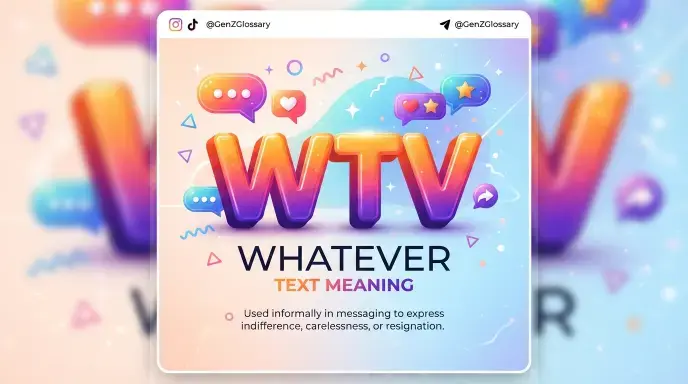
If you have received a message containing “WTV,” you may have wondered what the abbreviation means.
Short forms like this are common in texting, social media, gaming, and online conversations because they allow people to communicate quickly.
In everyday digital communication, WTV usually means “whatever.”
It can express indifference, acceptance, uncertainty, or a casual dismissal, depending on the conversation and the sender’s tone.
However, the meaning is not always limited to texting slang.
Like many abbreviations, WTV can have different meanings in specialized subjects such as physics, medicine, aviation, technology, and other professional fields.
This is why context is particularly important when interpreting it.
This guide explains the WTV text meaning in simple language, including how it is used on WhatsApp, Instagram, TikTok, and dating apps.
It also discusses specialized interpretations, common misunderstandings, similar abbreviations, and appropriate ways to respond.
Meaning & Definition:
In everyday texting, WTV most commonly stands for “whatever.” It is an informal abbreviation used when someone wants to shorten their message or communicate in a relaxed way.
For example:
- “WTV, you decide.”
- “WTV happens, don’t worry.”
- “I’m okay with wtv you choose.”
- “WTV works for me.”
The exact feeling behind the abbreviation depends heavily on the surrounding words. Someone saying “WTV works for me” may genuinely mean that they are comfortable with any choice.
On the other hand, “WTV 🙄” can sound dismissive or irritated.
The abbreviation is particularly common among people who regularly use texting and social media.
It saves time and fits naturally into casual conversations where complete words are not always necessary.
It is important to distinguish the abbreviation from the full word “whatever.” The meaning is generally the same, but the abbreviated form feels more informal.
A person might use “whatever” in ordinary writing but choose “wtv” when chatting with friends.
WTV can also appear in lowercase as “wtv.” Capitalization usually does not change its meaning. In fast-paced digital communication, people often use lowercase abbreviations simply because they are easier to type.
The emotional meaning can range from neutral to dismissive:
Neutral: “Wtv you want is fine.”
Casual: “Wtv, let’s just go.”
Dismissive: “Wtv, I don’t care.”
Therefore, understanding the words around WTV is often more important than the abbreviation itself.
Background:
The use of abbreviations such as WTV developed alongside the broader culture of digital communication.
Text messaging encouraged people to shorten common words because early mobile phones made typing slower and more cumbersome.
As online messaging became faster and more widespread, abbreviated language became a normal part of casual communication.
WTV is essentially a shortened form of “whatever.”
It belongs to the same broad family of informal internet abbreviations as terms such as “idk,” “tbh,” “imo,” and “rn.”
These expressions are designed primarily for speed and convenience rather than formal writing.
Social media has also helped spread abbreviated language across different age groups and communities.
A person may encounter WTV in a private message, a comment, a group conversation, a caption, or a dating-app chat.
The abbreviation does not have one universally fixed emotional tone. Its interpretation has evolved according to how people use it.
In some conversations, it simply means “anything you choose.” In others, it can communicate that the speaker does not want to continue discussing a subject.
For example:
“WTV movie you want to watch is fine.”
Here, WTV carries the idea of flexibility.
By contrast:
“WTV. I’m done arguing.”
Here, it sounds more like dismissal or frustration.
This demonstrates an important feature of internet slang: the same abbreviation can communicate different attitudes depending on context.
WTV should therefore not automatically be interpreted as rude. The surrounding sentence, punctuation, emojis, relationship between the speakers, and previous messages can all influence its meaning.
In formal environments, it is usually better to write “whatever,” “any option,” or another precise phrase instead of using WTV. Abbreviations intended for casual communication can appear overly informal in business correspondence, academic writing, official documents, and professional reports.
Usage in Different Contexts

WTV is primarily an informal expression, but people use it in several different situations. Understanding the context helps determine whether it means simple flexibility, indifference, or dismissal.
Casual Chat
Friends may use WTV when they do not have a strong preference.
Example:
“Where should we eat?”
“WTV you want.”
Here, the speaker is saying that the other person can choose.
Arguments
WTV can sometimes indicate that someone wants to stop discussing an issue.
Example:
“WTV, I’m not arguing about this anymore.”
In this situation, it can sound impatient or emotionally distant.
Social Media
People may use WTV in comments, captions, or direct messages to express a relaxed attitude.
Example:
“WTV happens, tomorrow is another day.”
The expression can make the statement sound conversational rather than formal.
Professional Communication
Using WTV in professional settings is generally discouraged unless the workplace culture is extremely informal. A colleague may understand it, but “whatever,” “either option,” or “any of these choices” is clearer and more professional.
Instead of:
“WTV works.”
A professional alternative would be:
“Either option works for me.”
Group Conversations
WTV can be convenient when several people are deciding something.
Example:
“WTV everyone wants is okay with me.”
This communicates flexibility without requiring a lengthy response.
The important point is that WTV is primarily context-driven slang. Its meaning may remain “whatever,” but the attitude behind it can change considerably.
Meaning in Chat, WhatsApp, Instagram, and TikTok

In modern social communication, WTV is most often understood as “whatever.” Its use is especially natural in short-form conversations.
WTV in Chat
In ordinary chats, WTV can mean “whatever,” “anything,” or “I don’t mind.”
Example:
“WTV you prefer is okay.”
Depending on the relationship, it may also suggest that the person is not particularly interested in the topic.
WTV on WhatsApp
WhatsApp conversations often contain abbreviations because people communicate quickly. Someone might write:
“Wtv, just let me know.”
This could mean, “Whatever, just let me know,” with the exact tone depending on the previous conversation.
WTV on Instagram
On Instagram, WTV may appear in comments or DMs. It can be used casually between friends or followers.
For example:
“Wtv, that outfit looks good.”
The abbreviation keeps the message short and conversational.
WTV on TikTok
TikTok comments frequently use compressed internet language. WTV can appear in reactions, jokes, captions, and conversations between users.
Its meaning remains highly dependent on context.
A playful comment may use WTV without any negative intention, while a serious discussion may make the same abbreviation seem dismissive.
Why People Use It
People generally use WTV because it is:
- Short and easy to type
- Familiar among internet users
- Appropriate for casual conversations
- Useful for expressing indifference or flexibility
- Convenient in quick replies
Because tone is difficult to communicate through text alone, however, WTV can sometimes be misunderstood. Adding a little context can make the intended meaning clearer.
Meaning in Physics, Medical, and Aircraft Terminology
The abbreviation WTV does not have one universal technical definition in physics, medicine, or aviation. Specialized fields frequently use the same three letters for different terms, and meanings can vary between textbooks, organizations, research papers, technical manuals, and industries.
This is an important distinction from everyday texting, where WTV commonly means “whatever.”
WTV in Physics
In physics or engineering material, WTV may be used as an abbreviation defined by a particular author, experiment, formula, system, or technical document. It should not automatically be interpreted as the texting slang “whatever.”
If WTV appears beside mathematical symbols, measurements, graphs, or scientific terminology, examine the document’s abbreviation list or the definition provided nearby.
WTV in Medical Contexts
Medical abbreviations are especially context-sensitive. WTV can potentially represent different terms depending on the specialty, institution, or medical document. A clinical abbreviation should therefore never be interpreted from the letters alone.
If you encounter WTV in a medical report, prescription-related document, or clinical record, the safest approach is to check the document’s terminology or ask a qualified medical professional for clarification.
WTV in Aircraft or Aviation Terminology
Aviation uses many specialized abbreviations, and the same combination of letters can have different meanings depending on the manual, aircraft system, airport, operator, or technical discipline.
When WTV appears in an aircraft maintenance document, flight-related material, engineering specification, or aviation database, its definition should be established from that specific source rather than from internet slang.
In short, context determines technical meaning. The casual texting definition is useful for social conversations, but it should not be transferred automatically into specialized fields.
Common Misconceptions
One of the biggest misconceptions is that WTV always means “whatever.” In everyday texting, that is usually the intended meaning, but specialized fields may assign completely different meanings to the abbreviation.
Another misunderstanding is assuming that WTV is automatically rude. It can sound dismissive, but it can also be completely neutral.
Consider these examples:
“WTV you choose is fine.”
This sounds flexible.
“WTV. Do what you want.”
This sounds much more dismissive.
Another misconception is that abbreviations always have a single official definition. Internet slang does not work that way. People frequently create, shorten, and adapt expressions according to community habits.
Some readers may also confuse WTV with other abbreviations that look similar. A short combination of letters can be easy to misread, especially when messages are typed quickly.
Finally, WTV is generally inappropriate for formal writing. Although many readers will understand it, informal slang can make professional communication appear careless or overly casual.
When interpreting WTV, ask three simple questions:
- Where did you see it?
- What was being discussed?
- What was the tone of the conversation?
These clues usually make the intended meaning much easier to determine.
Similar Terms & Alternatives
Several abbreviations can appear similar to WTV or serve a related purpose.
Whatever
This is the complete word represented by WTV in common texting.
Example:
“Whatever you want is fine.”
IDK
“IDK” means “I don’t know.” It communicates uncertainty rather than indifference.
Example:
“IDK where we should go.”
IDC
“IDC” means “I don’t care.” It can sound stronger or more dismissive than WTV.
Example:
“IDC what we watch.”
TBH
“TBH” means “to be honest.” It introduces a candid statement and has a completely different function from WTV.
NVM
“NVM” means “never mind.” It is commonly used when someone wants to withdraw a question or tell another person to disregard something.
Whatever You Want
In some conversations, the clearest alternative to WTV is simply writing the full phrase:
“Whatever you want.”
This removes some of the ambiguity that can occur with abbreviations.
Choosing the right alternative depends on what you actually want to communicate, If you mean flexibility, “either is fine” may be better. If you mean uncertainty, “I don’t know” is clearer. I
f you want to end a discussion, “let’s leave it there” may communicate your intention more respectfully.
How to Respond to WTV
The best response depends on the tone and situation.
If someone says:
“WTV you want.”
and they appear relaxed, you can simply make the decision:
“Okay, let’s go with pizza.”
If WTV seems dismissive, you can avoid escalating the conversation:
“No worries. We can talk about it later.”
If you are unsure what the person means, asking for clarification is perfectly reasonable:
“Do you mean you’re okay with either option?”
In a friendly conversation, you might respond playfully:
“WTV? I’m choosing, then.”
If the abbreviation appears during an argument, avoid assuming the worst. Text messages do not communicate facial expressions or voice tone, so a short reply may sound harsher than intended.
When communicating yourself, consider replacing WTV with clearer wording if the subject is important. For example, instead of “WTV,” you could say:
- “Either option is fine with me.”
- “I don’t mind.”
- “You can choose.”
- “Whatever works for you.”
- “I’m okay with either one.”
These phrases reduce the possibility of misunderstanding.
Differences From Similar Words
Although WTV usually represents “whatever,” it is not identical in tone to every similar expression.
WTV vs. Whatever:
They generally have the same basic meaning, but WTV is more informal and associated with texting.
Vs. IDC:
WTV can communicate flexibility, while IDC more directly communicates a lack of concern.
Vs. NVM:
WTV relates to “whatever,” while NVM tells someone to disregard something or means “never mind.”
For example:
“Anything is fine.”
Usually sounds neutral and cooperative.
“WTV.”
Could sound neutral, bored, annoyed, or dismissive.
This difference demonstrates why abbreviations should be interpreted according to the entire conversation rather than the letters alone.
Relevance in Online Conversations & Dating Apps
WTV can appear naturally in dating-app conversations, particularly when two people are discussing plans.
For example:
“WTV restaurant you like works for me.”
This can communicate flexibility and make planning easier.
However, dating conversations require extra attention to tone. A message such as:
“WTV.”
may be interpreted as boredom or lack of interest, even if the sender simply intended to say “I don’t mind.”
This is particularly important when talking to someone for the first time. Short, ambiguous replies can unintentionally make a conversation feel one-sided.
Instead of replying:
“WTV.”
you could say:
“I’m good with whatever you prefer.”
That version communicates the same general idea while sounding more engaged.
WTV can also be playful between people who already understand each other’s communication style. Close friends, couples, and people who regularly use slang may recognize the intended tone immediately.
On dating platforms, however, clarity usually works better than excessive abbreviation. If you’re interested in someone, a slightly fuller response can make your interest easier to recognize.
The key lesson is simple: WTV itself is not necessarily positive or negative. The surrounding conversation determines how it is perceived.
FAQs:
What does WTV mean in texting?
WTV is a common texting abbreviation for “whatever.” People use it in chats, texts, and social media when they want to express indifference, acceptance, or dismissal.
What does WTV stand for?
WTV stands for “whatever.” It is a shortened form commonly used in informal digital conversations.
Is WTV slang?
Yes, WTV is informal texting slang. It is commonly used in text messages, social media posts, comments, and online chats rather than formal writing.
What does WTV mean on Snapchat?
On Snapchat, WTV usually means “whatever.” The exact tone can vary depending on the conversation and may express indifference, annoyance, or simply acceptance.
What does WTV mean on TikTok?
On TikTok and in comments, WTV generally means “whatever.” It can be used casually to show that someone does not mind, does not care, or is dismissing something.
Conclusion
The most common WTV text meaning is “whatever.” In casual texting, it can express flexibility, indifference, acceptance, or dismissal depending on the situation and tone.
You may encounter it in messages, WhatsApp conversations, Instagram DMs, TikTok comments, group chats, and dating-app conversations.
Although the everyday meaning is straightforward, WTV can have different definitions in specialized areas such as physics, medicine, aviation, engineering, and other technical fields.
In those settings, the abbreviation should always be interpreted according to the specific document or professional context.
When someone sends you WTV, consider the surrounding words before deciding what they mean.
A message such as “WTV you want is fine” is usually flexible, while a standalone “WTV” might sound dismissive.
Ultimately, understanding abbreviations is less about memorizing letters and more about recognizing context, tone, and conversation style. If clarity matters, using the complete phrase or a more specific alternative is often the best choice.

Hi, I’m Jackson Lee, the creator of EnglishIDM. I’m passionate about English words, idioms, phrases, and everyday expressions. I created EnglishIDM to make confusing English meanings simple, clear, and easy to understand. My goal is to help readers build stronger vocabulary and communicate with confidence—one word and phrase at a time.